

Virtual Reality
Create Immersive Virtual Reality Experiences That Transform
We develop cutting-edge VR applications that transport users to fully immersive digital environments for training, simulation, entertainment, and business applications.
Immersive Experiences
Multiplayer VR
3D Environments
VR Solutions
Comprehensive VR Development Services
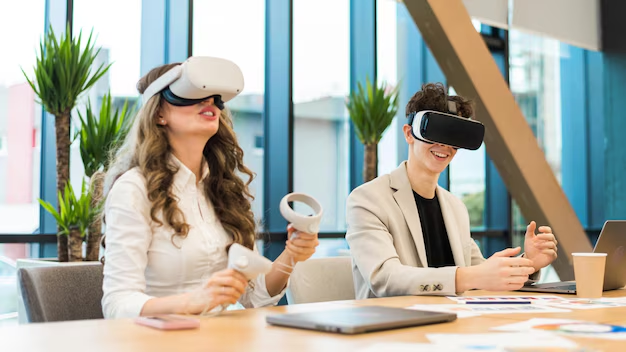
We create fully immersive VR experiences that transport users to digital worlds, enabling realistic training, engaging entertainment, and innovative business solutions.
From room-scale VR to 360° video experiences, we leverage the latest VR technologies to deliver solutions that work across all major VR platforms and devices.
90%
Better Retention
75%
Cost Savings
300%
Engagement Increase
VR Types
Types of VR We Develop
Room-scale VR
Full immersion with physical movement in designated play areas.
- Physical movement
- Hand tracking
- Multiplayer
360° Video VR
Immersive video experiences captured with 360° cameras.
- Real-world footage
- Tourism & events
- Storytelling
Desktop VR
VR experiences viewed on desktop screens with mouse/keyboard control.
- No headset needed
- Browser-based
- Accessible
Mobile VR
VR experiences using smartphones and basic VR headsets.
- Cardboard compatible
- Affordable
- Portable
Social VR
Multi-user virtual environments for collaboration and social interaction.
- Multiplayer
- Virtual meetings
- Collaboration
Training VR
Immersive training simulations for skill development and practice.
- Skill training
- Safety simulations
- Performance tracking
Use Cases
VR Applications Across Industries
VR Training & Simulation Solutions
Revolutionize employee training with immersive VR simulations.
- Industrial safety training simulations
- Equipment operation and maintenance training
- Emergency response and crisis management
- Soft skills and customer service training
- Military and defense training simulations
- Performance assessment and analytics
VR Real Estate & Architecture Solutions
Transform property viewing and architectural visualization.
- Virtual property tours before construction
- Architectural walkthroughs and design reviews
- Interior design visualization and customization
- Urban planning and cityscape simulations
- Renovation and remodeling previews
- Virtual staging of empty properties
VR Healthcare Solutions
Advance medical training and patient treatment with VR.
- Surgical simulation and planning
- Anatomy education with 3D models
- Phobia treatment and exposure therapy
- Pain management and distraction therapy
- Physical rehabilitation exercises
- Medical equipment training
VR Education Solutions
Transform learning with immersive educational experiences.
- Virtual classrooms and lecture halls
- Historical recreations and time travel
- Science lab simulations
- Language immersion environments
- Virtual field trips to remote locations
- Art and creativity workshops
Platform Support
VR Platforms We Support
Oculus
Oculus Quest, Rift, and Go platform development.
Quest 2
Rift S
Go
HTC Vive
Vive, Vive Pro, and Cosmos series development.
Vive Pro
Cosmos
Focus 3
Windows Mixed Reality
Mixed Reality headsets and HoloLens development.
HoloLens 2
WMR Headsets
Enterprise
Mobile VR
Cardboard, Daydream, and Gear VR development.
Cardboard
Daydream
Gear VR
PlayStation VR
PSVR and PSVR 2 platform development.
PSVR
PSVR 2
PS5
WebVR
Browser-based VR experiences accessible to all.
WebXR
A-Frame
Browser VR
Our Process
VR Development Workflow
01
Concept & Design
Define VR experience goals, create storyboards, and design user interactions.
02
3D Environment Creation
Design and develop 3D models, textures, and complete virtual environments.
03
VR Development
Implement VR interactions, physics, and optimize for target platforms.
04
Testing & Optimization
Test for VR comfort, performance, and optimize for smooth experience.
05
Deployment
Publish to app stores, enterprise distribution, or on-site installation.
06
Support & Updates
Provide ongoing maintenance, updates, and performance monitoring.
Business Value
Benefits of VR Development
Superior Training
VR training shows 90% better knowledge retention compared to traditional methods.
Risk-free Practice
Practice dangerous or expensive procedures in safe virtual environments.
Cost Reduction
Reduce training costs by 75% and eliminate travel expenses for remote collaboration.
Enhanced Engagement
VR experiences increase user engagement by 300% compared to traditional media.
Remote Collaboration
Enable teams to work together in shared virtual spaces from anywhere in the world.
Measurable Results
Track user performance, progress, and outcomes with detailed analytics.
Common Questions
VR Development FAQ's
VR equipment requirements vary by experience type: High-end VR: PC with NVIDIA GTX 1060/AMD Radeon RX 480 or better, VR headset (Oculus Rift, HTC Vive), motion controllers. Standalone VR: Oculus Quest 2, HTC Vive Focus 3 (no PC needed). Mobile VR: Smartphone with gyroscope, VR headset (Cardboard, Daydream). Console VR: PlayStation 4/5 with PSVR headset. Room Requirements: Clear space (minimum 2m x 1.5m for room-scale), good lighting, no reflective surfaces. Network Requirements: Stable internet for multiplayer experiences. Accessibility: Options for seated experiences, comfort settings. Enterprise Solutions: Custom hardware configurations for specific use cases. Testing Equipment: We test across multiple device types. Future Compatibility: Designs adaptable to emerging hardware.
We implement multiple strategies to minimize VR motion sickness: Frame Rate: Maintain consistent 90+ FPS for smooth experience. Comfort Settings: Teleportation movement, snap turning, vignette effects. User Controls: Adjustable comfort settings for individual preferences. Design Principles: Fixed reference points, gradual acceleration, user-centered design. Testing Protocols: Extensive user testing with diverse participants. Best Practices: Follow industry guidelines for VR comfort. Hardware Optimization: Ensure proper tracking and low latency. User Education: Tutorials and guidelines for first-time users. Session Management: Recommended session durations and breaks. Accessibility Options: Multiple movement and interaction options. Continuous Improvement: User feedback incorporation for comfort optimization.
Development timelines vary based on complexity: Simple VR Experience: 8-12 weeks (360° video, basic interactions). Moderate VR Application: 12-20 weeks (interactive environment, custom 3D assets). Complex VR Application: 20-32 weeks (multiplayer, complex interactions, advanced physics). Enterprise VR Training: 24-40 weeks (custom simulations, analytics, LMS integration). Key Timeline Factors: 3D environment complexity, interaction design, platform support, performance requirements. Agile Development: We work in 2-week sprints with regular deliveries. MVP Approach: Launch with core features, add enhancements iteratively. Testing Phase: 25-35% of timeline dedicated to testing and optimization. Client Collaboration: Regular reviews and feedback sessions. Quality Assurance: Multiple testing cycles for performance and comfort.
Yes, we create VR solutions for groups and events: Multi-user VR: Shared virtual environments for up to 50+ simultaneous users. Event Solutions: VR installations for exhibitions, trade shows, and conferences. Classroom VR: Synchronized experiences for educational institutions. Enterprise Training: Group training sessions with instructor oversight. Social VR: Virtual events, meetings, and networking spaces. Technical Considerations: Network infrastructure, server architecture, synchronization. Hardware Management: Headset management, charging stations, sanitation. Content Delivery: Centralized content distribution and updates. Monitoring & Analytics: Real-time monitoring of user experiences. Support Services: On-site technical support for events. Custom Solutions: Tailored experiences for specific event requirements.
We provide complete 3D environment creation: Environment Design: Custom 3D worlds, architectural visualization, terrain creation. Asset Creation: 3D models, textures, materials, and animations. Optimization: LOD (Level of Detail) systems, texture compression, polygon reduction. Tools & Software: Blender, Maya, 3ds Max, Substance Painter, ZBrush. File Formats: FBX, OBJ, GLTF, compatibility with VR platforms. Performance Optimization: Optimized for target platform capabilities. Quality Assurance: Testing across different VR hardware. Scale & Proportion: Accurate scale for realistic VR experience. Lighting & Effects: Dynamic lighting, shadows, particle effects. Interactive Elements: Physics-based interactions, animated objects. Client Collaboration: Review and approval process for all 3D assets.
Ready to Enter the Virtual World?
Let's create immersive VR experiences that transform how you train, collaborate, and engage with your audience.
Free VR Consultation
Prototype Development
Multi-platform Support
